
Large-Scale Admissions Essay and Statement-of-Purpose Editing Project Large-Scale Essay and Statement of Purpose Editing Project
Large-Scale Admissions Essay and Statement-of-Purpose Editing Project
1. Background and Objectives
Mynavi Shingaku requested a system that could consistently improve the quality of admissions essays and statements of purpose submitted online by applicants while also processing high volumes within short lead times. E-LINE combined practical expertise in educational assessment with editorial-production operations and designed and operated the service in three layers: evaluation rubric × editing guide × QA (quality assurance).
2. Scope of Support
Target drafts: admissions essays (prompt-based, source-reading, and free-response types) and statements of purpose for universities, junior colleges, and vocational schools
Supported work: guidance on content structure, clarification of key points, addition of specificity, strengthening of evidence, vocabulary/grammar/notation consistency, word-count adjustment, tone refinement, line-break and formatting-rule handling, and fit tuning by target school
Delivery format: File with Track Changes + feedback comments / one-page summary of improvement proposals
3. Evaluation Rubric (Criteria for Scoring and Feedback)
To make the editing criteria visible, we use a rubric like the one below to check each perspective, provide comments, and present improvement proposals. Feedback is written with enough specificity for applicants to reproduce the improvement in their next draft.
Understanding the Task: Whether the argument matches the intent of the prompt and fulfills source-material requirements
Structure: Three-part introduction-body-conclusion structure, topic sentences for each paragraph, and natural progression of the argument
Argumentation: Whether the cycle of claim → evidence → concrete example → mini-conclusion is established and whether counterarguments are addressed
Originality and Specificity: Whether distinctive resources such as experiences, activities, reading, and numerical details are incorporated
Fit (Statement of Purpose): Connection among desired learning content, curriculum, and future goals, and fit with the school's culture and research fields
Language Expression: Appropriate vocabulary, reduction of redundancy, consistent tense and level of formality, and correction of typographical errors
Compliance: Word/character limits, submission format, treatment of citations, and prohibited items
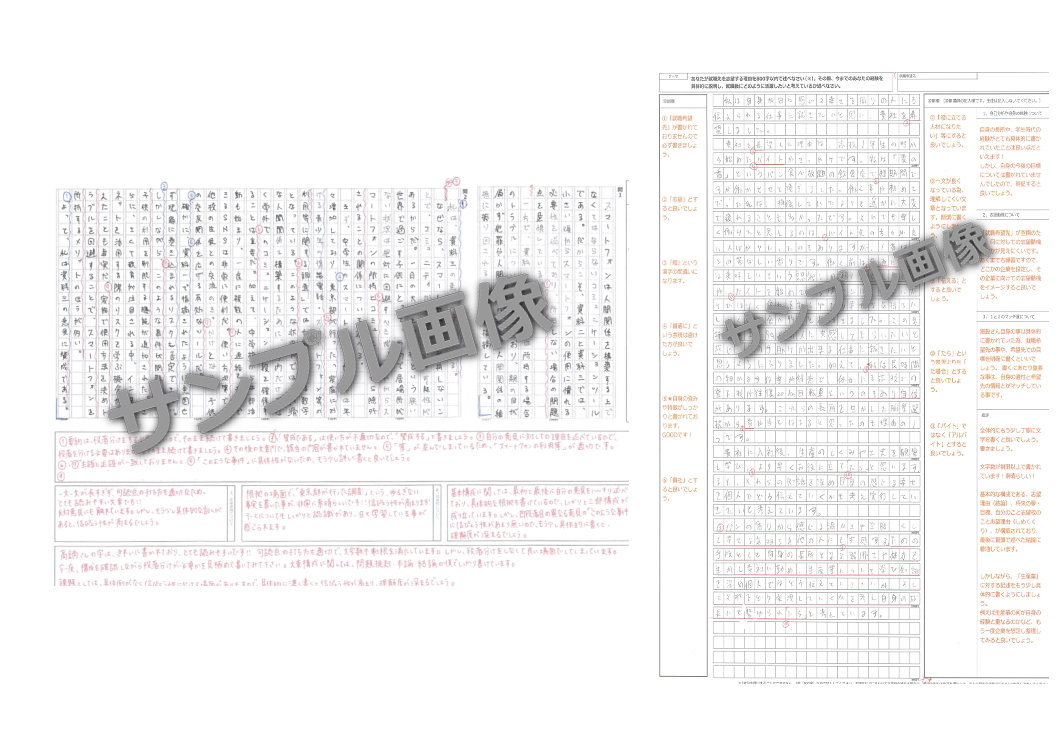
4. Editing Process (First → Second → Final)
First Review (Diagnosis)
Immediately after submission, we use the rubric to create a 'map of the current state,' clearly identifying misaligned points and structural inconsistencies. When needed, we propose an outline at the table-of-contents level.
Second Review (Revision Support)
While preserving the applicant's 'own words,' we strengthen evidence, add concrete examples, and reorganize paragraphs. For statements of purpose, we strengthen connections to school-specific elements such as curricula, laboratories, and available qualifications.
Final Review (Finishing)
We adjust word counts, reduce redundant expressions, standardize line-break and notation rules, and optimize subheadings and transitions. A pre-submission checklist is returned with the edited draft.
5. Feedback Design (Including How to Revise)
Each draft is accompanied by a one-page A4 feedback summary showing 1) strengths, 2) the single most important point to improve next, and 3) a reusable template—for example, a four-sentence pattern of claim → evidence → concrete example → conclusion. The goal is for applicants to be able to write to the same standard the next day, so we also provide guidance on how to adapt example sentences and include vocabulary lists.
6. Guidance Points Specific to Statements of Purpose
We verbalize 'Why this school / this program?' by connecting it to publicly available information such as faculty policies, courses, practicums, and distinctive features.
Past learning and activities—club activities, committees, volunteering, part-time work, qualifications, and more—are broken down into skills, attitudes, and outcomes and reframed in a context that the receiving institution can evaluate more easily.
Future goals are structured across four levels—desired industry → job type → early career → medium-term goal—to establish the right level of specificity and avoid empty expressions.
7. Approaches by Admissions-Essay Type
Prompt-based type: We analyze the verbs in the prompt—such as state, discuss, or compare—and align the response with the required action.
Source-reading type: Key points from figures, tables, and quotations are organized in the order of extraction → hypothesis → verification, avoiding unsupported opinion statements.
Free-response type: Originality is maintained through three stages—focusing the theme, moving from a concrete episode to generalization, and then to broader applicability.
8. Ethics and Originality (AI and Plagiarism Measures)
To protect applicants' learning opportunities and fairness, we never ghostwrite. E-LINE performs: 1) similarity checks against the public web and past databases; 2) heuristic checks for signs of AI generation, such as unusual vocabulary frequency, logical leaps, and inconsistent writing style; and 3) return-to-author editing suggestions that rephrase content using the applicant's own vocabulary. We deliver the work only after it is in a state where the applicant can write in their own words. Where citation or reference is required, we also provide guidance on source attribution.
9. Operating Structure and SLA
Review structure: Double-checking by a senior editor with final responsibility and field-specific reviewers in areas such as education, healthcare, information, and design.
Lead time: Initial feedback is normally returned within 48–72 hours, with urgent cases handled through a priority lane.
Volume fluctuation support: During peak application periods, queue management and automatic assignment are used to level workloads and prevent quality deterioration.
10. Quality Assurance (QA) and Conversion into Learning Materials
Deliverables undergo two-stage machine and human verification using an editorial checklist of approximately 50 items. Common improvement patterns are organized into compact learning materials—for example, five templates for strengthening evidence in one sentence—and included as mini learning materials to improve applicants' ability to self-check.
11. Security and Personal Information
Applicant information is handled with minimum necessary access rights, and data is stored in encrypted form. Drafts are automatically deleted after a specified period following project closure and are never reused for secondary purposes.
12. Typical Outcome Trends
Resolving misalignment in the argument clarifies the reformulation of the question at the beginning and gives the evaluator a clearer reason to continue reading.
Making evidence more concrete supports abstract claims with episodes and numerical details, increasing persuasiveness.
Optimizing information density within the word limit makes it clear what should be removed and retained, improving readability.
By clearly articulating fit with the target school, a simple 'preference' is elevated into a 'plan,' allowing individuality to emerge.
13. Optional Support (Interview and Oral Examination Preparation)
Based on the content of the statement of purpose, we can also provide practice consisting of a mock interview (15–20 minutes) plus a 60-second oral summary. Applicants practice converting what they wrote into words they can speak, ensuring consistency with the interview.
Contact Us
Please feel free to contact us using the information below.
